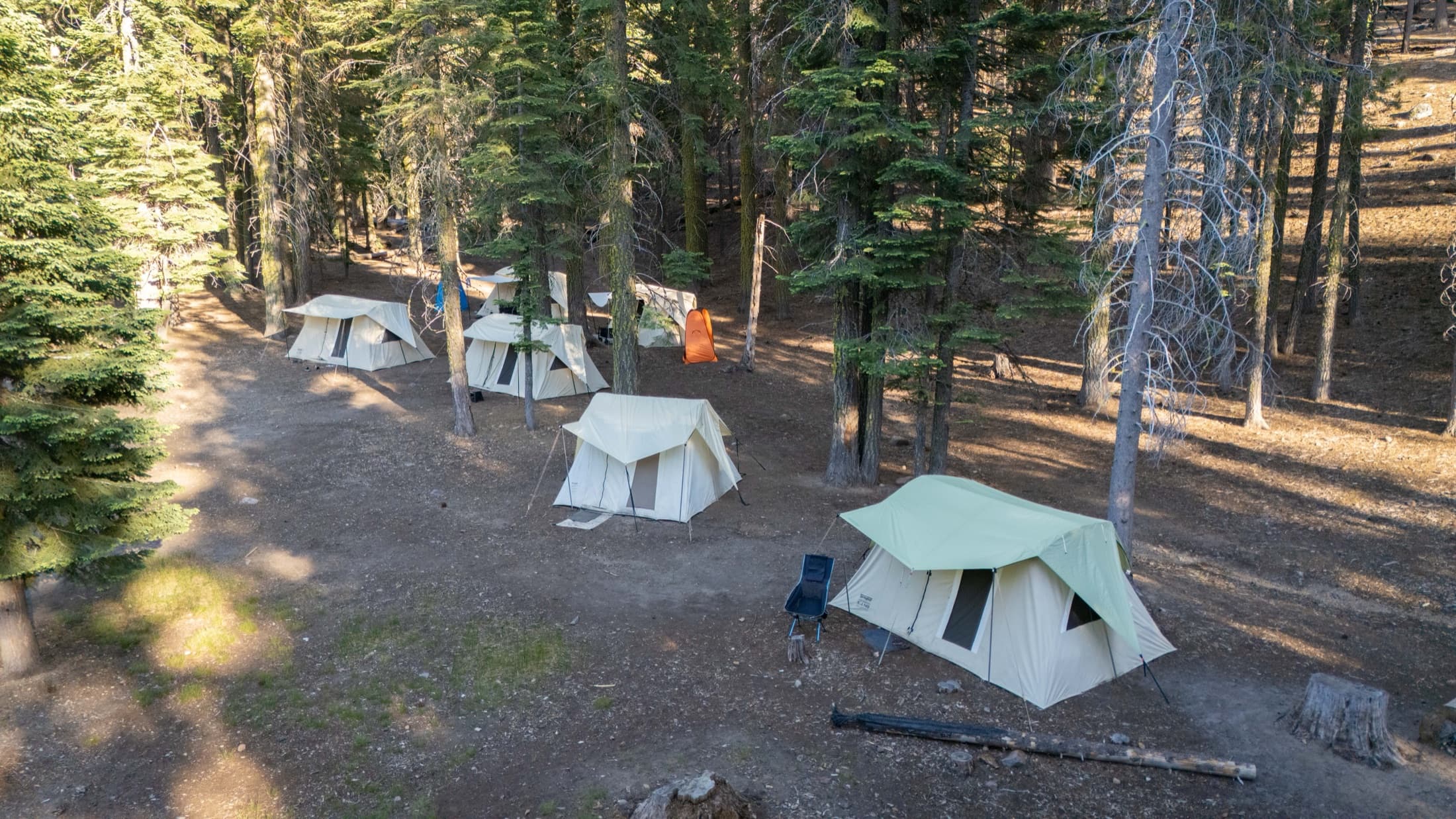
Family Camping 101
How to take your family camping
Every step, in order, from “where do we even go?” to the drive home. No experience assumed, because nobody is born with any.
The whole trip, in a minute
- Pick a developed campground less than two hours from home.
- Book one night. Sold out? Set a free cancellation alert.
- Borrow the big gear. If you buy: sleeping pads first.
- Pack bins for gear, bags for clothes. Print the checklist.
- Leave in the morning. Arrive by 3. Practice the tent at home first.
- Cook boring food, plus s'mores. Store everything scented by your campground's rules — never in the tent.
- Warm kids sleep: pad under them, dry clothes, beanie.
That's genuinely the whole thing. The eight steps below carry the details — read them all, or skip straight to naming a date.
Two minutes, and your first trip stops being hypothetical.
“The skills look intuitive when you watch a confident family roll into a campsite at 5 PM and have dinner on by 6:30. They're not intuitive. They're learned.”
That's from an essay our co-founder Sally wrote about her father, who grew up working the land in segregated Memphis, and her daughters, who fall asleep in canvas tents. Most families don't inherit camping. Nobody handed us a checklist either — our family learned it one trip at a time, across 379 nights outdoors at 81 campgrounds. This page is what we wish someone had handed us at trip zero.
Everything here works anywhere in America, without us. And if you are near our California trips, there's a shortcut: come camp with us first — gear, food, and teaching handled, free to families.
The whole trip, in eight steps
01
Pick a campground close to home
02
Book it early — or catch a cancellation
03
Borrow the gear first, buy slowly
04
Pack bins for gear, bags for clothes
05
Leave in the morning, arrive by 3
06
Practice the tent, then pitch it in daylight
07
Cook boring food, store it like the bears are real
08
Warm kids at night, found kids by day
Step one
Pick a campground close to home
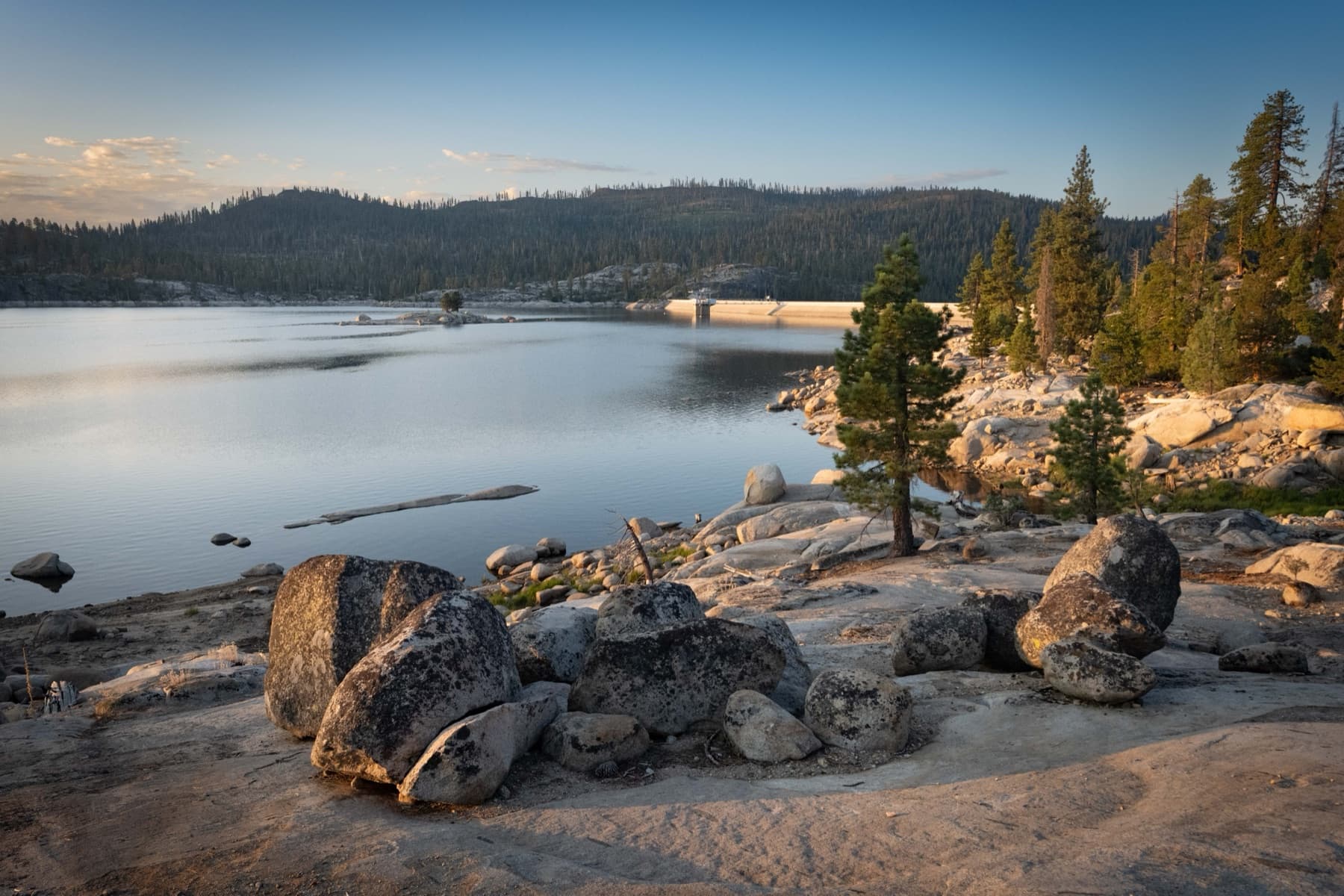
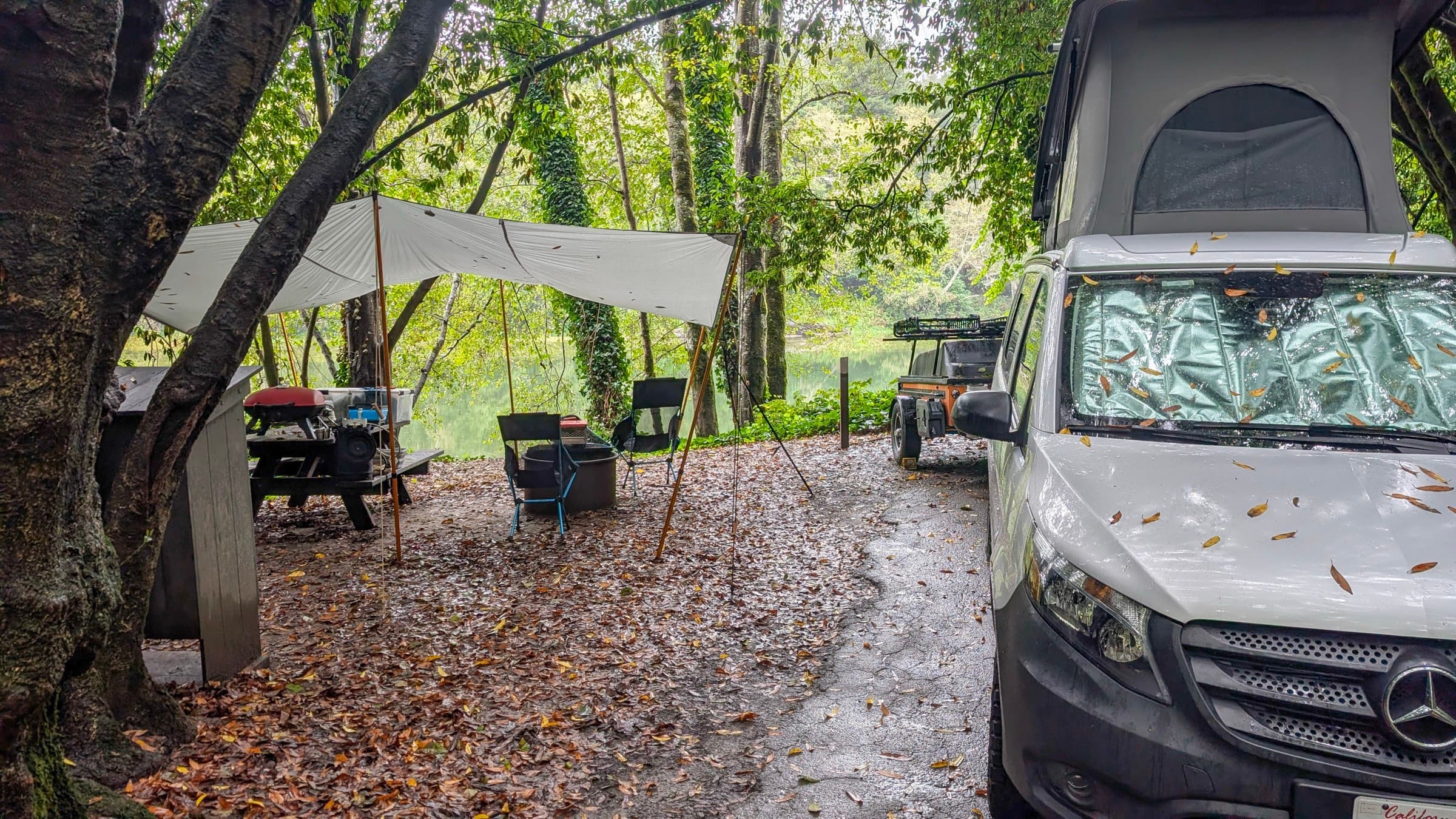
Pick a developed campground less than two hours from home. You want flush toilets, running water, a picnic table, a fire ring, and ideally a campground host — a host means there is someone to ask. Close to home means the drive doesn't eat the day. And if the night truly falls apart, you can drive home and sleep in your own beds. Knowing you can bail is usually the reason you don't need to.
The details, and why they work
Look for the things kids actually use: a swimming area or a shallow creek, a loop road for bikes, other families in the loop. County and regional parks are the most overlooked first-timer option in most states. They are easier to book than the famous parks and just as good at this stage. You are not choosing a destination for life. You are choosing a place to learn.
The fastest way to shortlist: ask Camp Sage, the free AI camping planner our team built. No signup. It knows 11,800+ public campgrounds in all 50 states. Tell it “first camping trip, two kids, less than two hours from home, flush toilets” and it hands you real options.
Step two
Book it early — or catch a cancellation
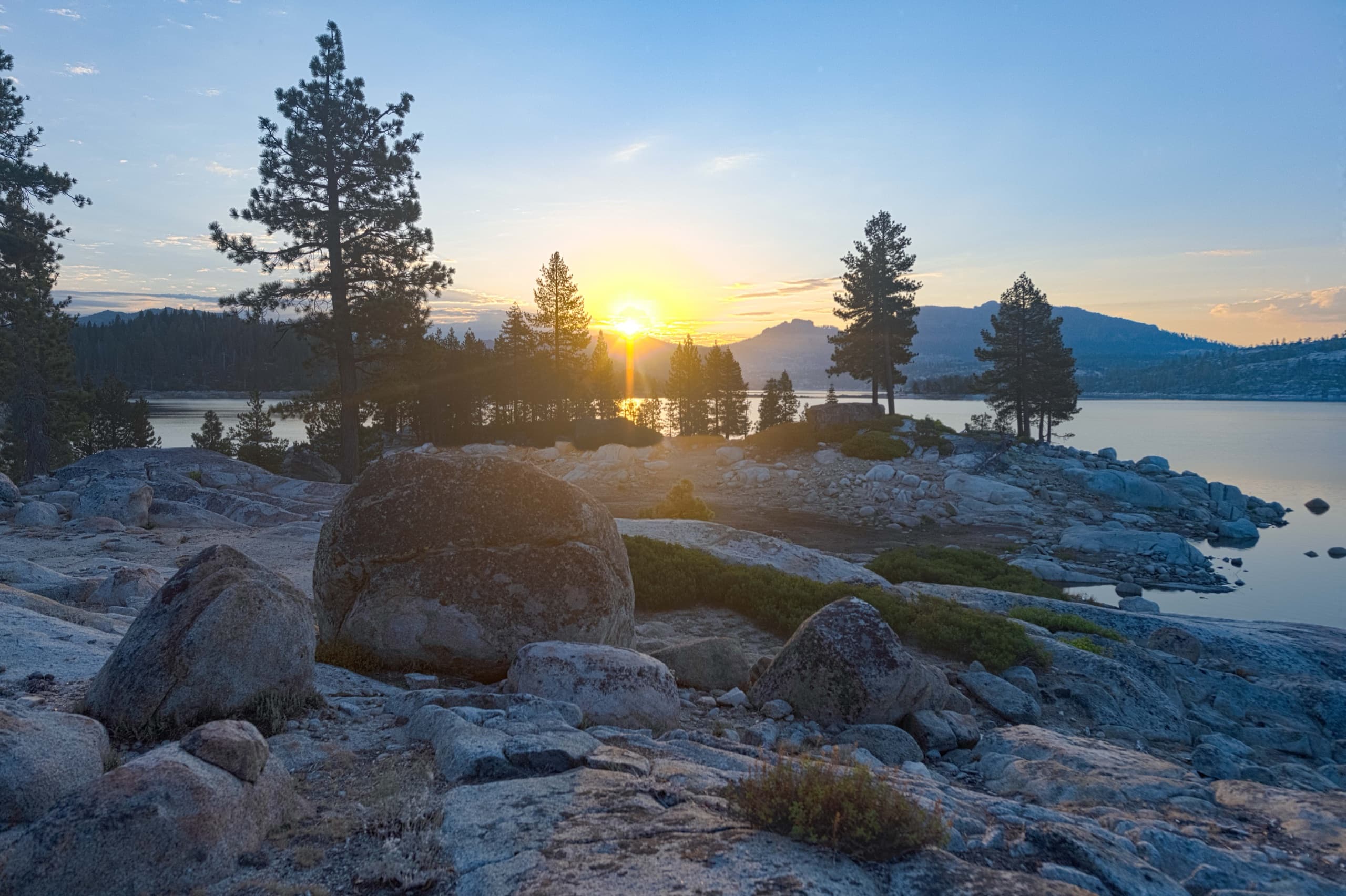
Public campgrounds open reservations on a schedule — often months ahead, and it genuinely varies by campground. Book the moment your dates open. Already sold out? Sold out does not mean sold out. Campers cancel constantly — in our own booking data, the openings cluster in the final two weeks before check-in. Set a free cancellation alert and someone else's change of plans becomes your campsite.
The details, and why they work
Two kinds of systems cover most public campgrounds in America. Recreation.gov handles federal lands: national parks, forests, BLM. Booking windows genuinely vary by campground, so check the “Seasons & Fees” tab on your campground's own page. State parks each run their own system — ReserveCalifornia, ReserveAmerica, Texas Parks & Wildlife, and dozens more — with their own windows and release times. Whichever one yours uses: create and verify your account days before a booking morning, not at 7:58.
Trust us on the cancellations. Our family has made 381 campground reservations and cancelled 233 of them — everyone who camps a lot operates this way, which means sites open up all the time. Most of our own trips start with a free alert, not a 7 a.m. booking war.
And if the window already passed: try a weekday night, aim for shoulder season, or check the first-come-first-served campgrounds. Arrive midweek, late morning, with a backup plan and small bills for the iron ranger.
Step three
Borrow the gear first, buy slowly
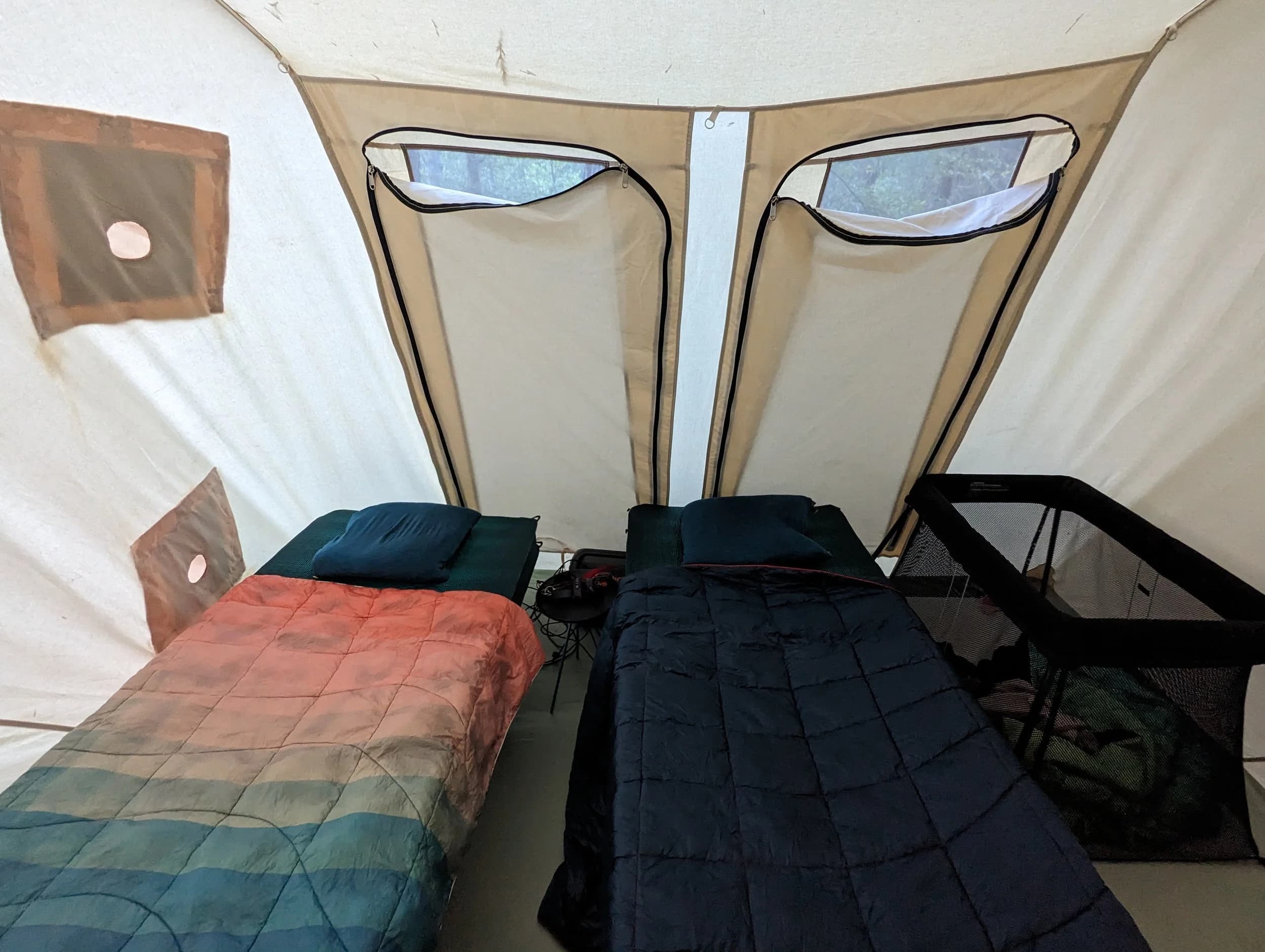
Do not buy everything. Ask friends, check your library for gear lending, and look at rentals — trip one is how you find out what your family actually needs. If you do buy, follow this order: sleeping pad first, sleeping bag second, headlamp third, rain layer fourth. Everything else can be borrowed, improvised, or skipped.
The details, and why they work
The pad surprises people. Cold comes up from the ground, not down from the air. So the pad's insulation — its R-value; look for 3 or higher — matters more than anything about the bag. Get bags rated 10 to 15 degrees colder than the forecast low. Nights outdoors run far colder than the daytime high suggests, especially in the mountains or near water. Kids sleep warmer in kid-sized bags: an adult bag has too much empty air for a small body to heat.
For the tent: size up by two. A “6-person” tent sleeps four people and their stuff. A solid starter setup runs a few hundred dollars if you borrow the big items, and it pays for itself within a handful of trips.
Or skip the shopping entirely
On our trips, the gear is already there
Outdoorithm Collective trips come with the tents, the cots, the camp kitchen, and the firewood — plus thirty people who have pitched a tent in the dark before and will happily do yours. Trips are free to families.
See how membership works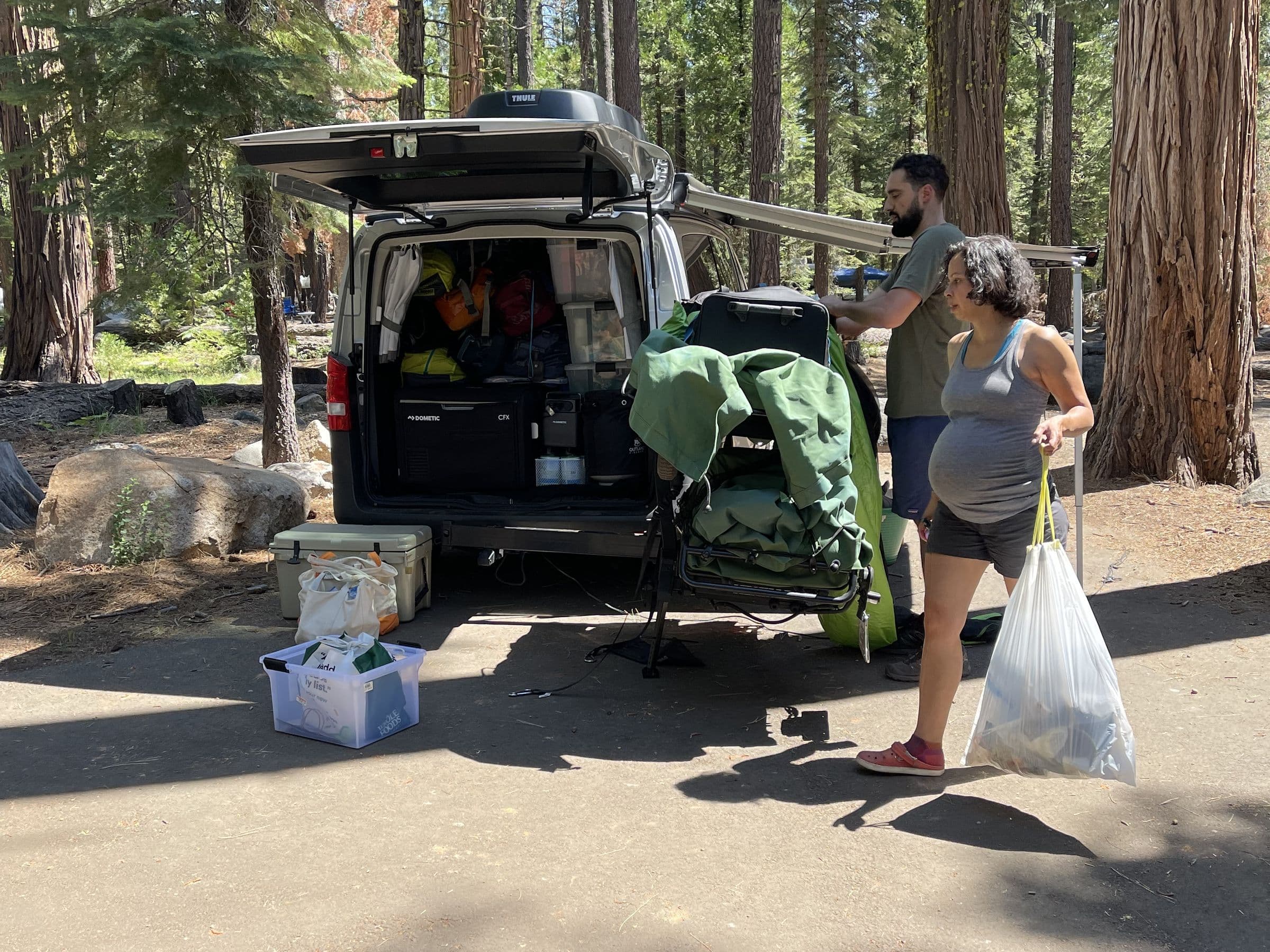
Step four
Pack bins for gear, bags for clothes
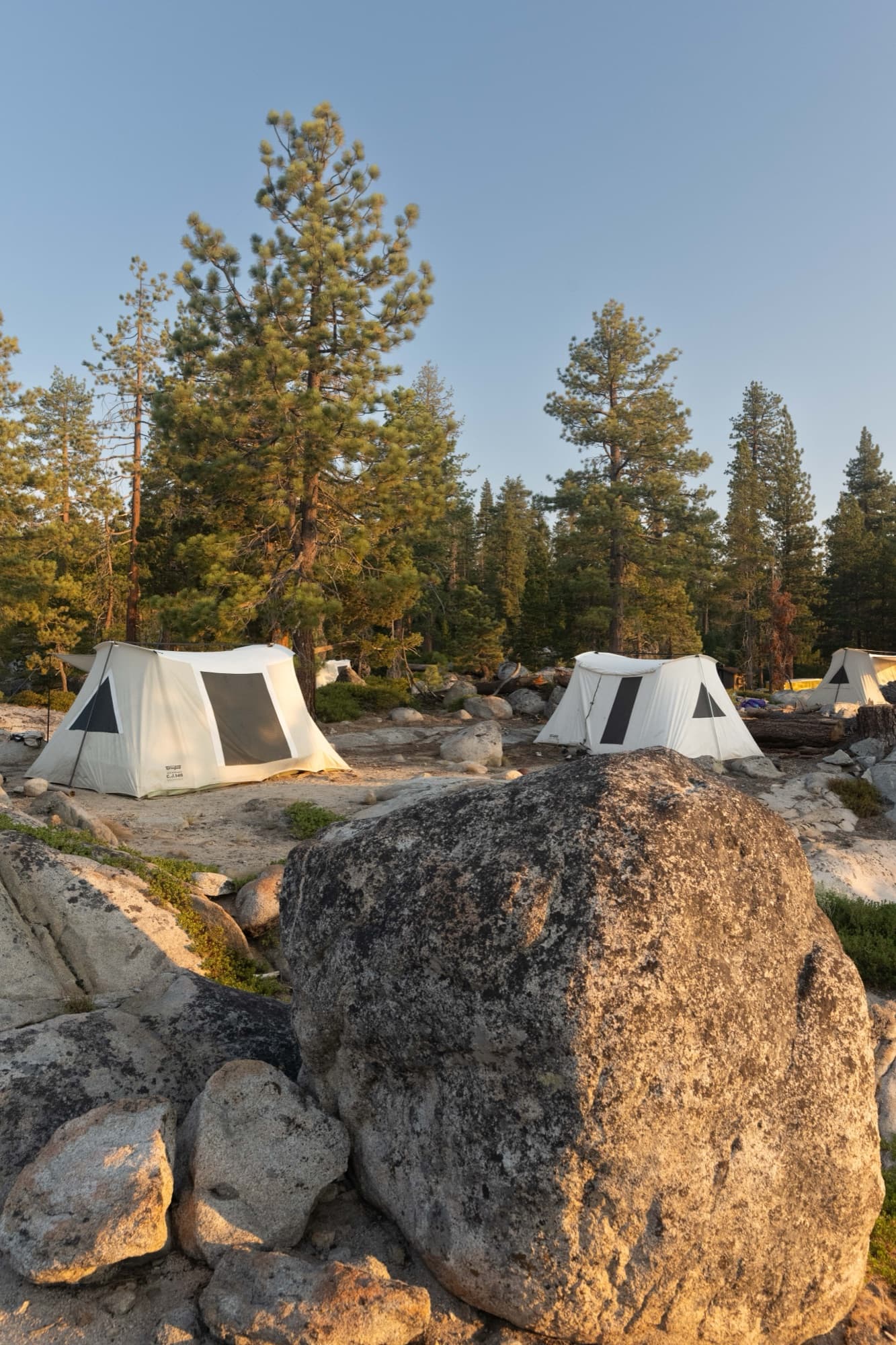
The system that ends the “where's the sunscreen” search: bins for gear, bags for clothing. One clear latching bin is the kitchen. One is camp gear: lights, stakes, tarp, tools, first aid. Clothes go in duffel bags, one per person. The bins stay packed between trips forever — so your second trip takes twenty minutes of prep instead of two days.
The details, and why they work
Load bins into the car first, heavy and low. The tent and chairs go in last because they come out first. Keep food out of the kitchen bin so it never needs unpacking — food travels in the cooler and a grocery bag.
Clothes are layers, not outfits: a warm layer for evening no matter the forecast, and a complete extra set of dry clothes per kid. Handing a soaked child dry clothes is the difference between a story and a disaster. Long underwear and a beanie are sleep gear, even in summer.
The things families forget most, in order: toothbrushes, tent stakes, medications, trash bags, toilet paper, spare batteries, and the lighter. Print the checklist and let each kid pack their own bag against it. They take it seriously precisely because it is a real job.
You don't need to finish the page before you go.
The steps will still be here after you've named the date.
Step five
Leave in the morning, arrive by 3
If this page could give you one sentence, it is this one: leave in the morning and be at the campground by mid-afternoon. Setting up a tent for the first time by headlamp, with tired and hungry kids, is the single most common way families decide camping isn't for them. Daylight makes everything easy.
The details, and why they work
You will lose cell service, usually about an hour out. Before you do: download offline maps, plus the music and podcasts for the drive home. Screenshot the reservation confirmation and site number — the check-in kiosk may be unstaffed and your email unreachable. Keep snacks and water bottles in the cab, not buried in a bin.
Two morning-of checks: the weather, and the fire restrictions where you're going. In a dry summer they change fast, wherever you camp. And buy your firewood near the campground, not at home — moving firewood spreads invasive pests, and most parks prohibit it.
Step six
Practice the tent, then pitch it in daylight
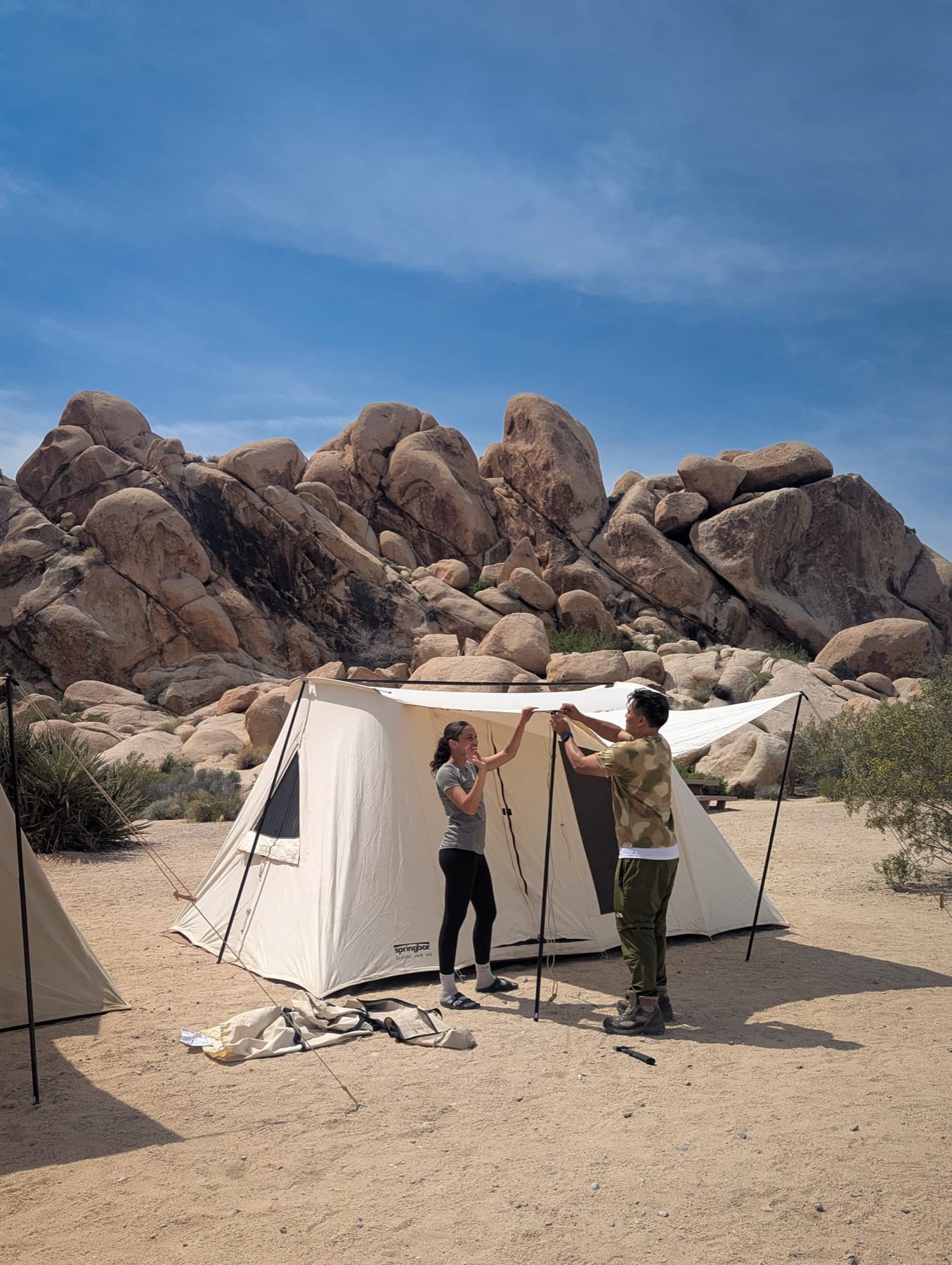
Pitch the tent once in the backyard before the trip. It turns a stressful unknown into a rehearsed twenty-minute job — and for kids, it doubles as the world's best trip announcement. At the campsite, walk the site before you unpack anything: flat ground, no roots or rocks, away from the low spot where rain would pool. Look up — never pitch under a dead or hanging limb.
The details, and why they work
The order that works every time: ground sheet down first, folded so it sits slightly smaller than the tent floor — an exposed edge funnels rain underneath you. Stake opposite corners tight, at 45 degrees leaning away. Rain fly on even if the forecast is clear, because dew is as wet as rain. Pull it taut so there's an air gap. Use the guylines even in calm weather; wind arrives at midnight. If nothing is truly level, sleep with heads uphill.
Give every family member a setup job — stakes, cots, string lights, firewood run. Camp goes up faster, and the kids stop being passengers and start being campers.

Step seven
Cook boring food, store it like the bears are real
Plan boring meals on purpose. The first-trip menu that works: sandwiches the day you arrive, one easy hot dinner, pancakes or eggs in the morning, and s'mores, which are mandatory. A two-burner stove beats the campfire for everything except marshmallows.
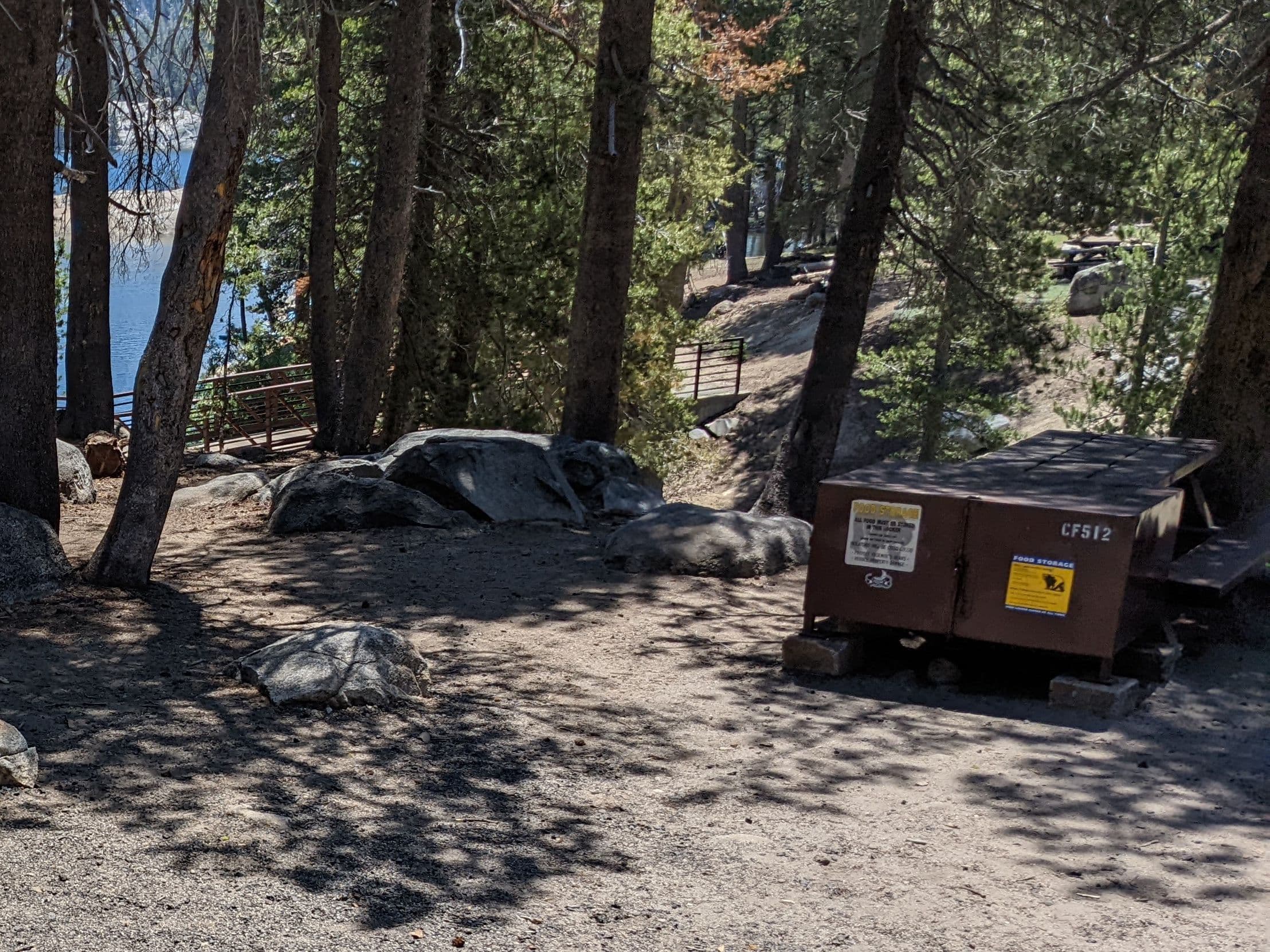
And the rule that is actual law in bear country: anything with a scent gets stored exactly the way your campground's posted rules say — rules differ by park, and the signs at your site are the authority. Food, coolers, trash — and the ones that surprise people: toothpaste, sunscreen, bug spray, baby wipes. Never, ever in the tent. Stored, every time, last thing before bed.
The details, and why they work
Do the knife work at home. Chop vegetables into bags, freeze a pre-cooked chili flat so it doubles as cooler ice, assemble foil packets the kids can build themselves. Cooler strategy: pre-chill it the night before, block ice on the bottom, cubes on top. If you can bring two coolers, one holds drinks and snacks so the food cooler stays shut and cold for days.
Bear country covers most Western parks and a growing share of Eastern ones — the Sierra, the Smokies, the Adirondacks. Bears open coolers like takeout containers, and rangers can confiscate unattended food and write citations. Even where there are no bears, the same habit keeps the raccoons out of your tent at 2 a.m.
Step eight
Warm kids at night, found kids by day
Warm kids sleep; cold kids end trips. The formula: an insulated pad under every sleeper, dry sleep clothes — never the damp ones they played in — and a beanie. Fill a water bottle with warm water, wrap it in a sock, and drop it in the sleeping bag fifteen minutes before bedtime. Everyone pees before bed. No exceptions, including you.
The details, and why they work
For daytime: a whistle on every kid with one rule attached — three blasts means “I'm lost, I stay put and keep blowing.” Walk the campsite boundary together on arrival, so “too far” is a place instead of an argument. After dark, clip a glow stick to each kid. You can count your children across a dark campground at a glance.
The health kit beyond band-aids: children's pain reliever with the dosing syringe, antihistamine, tweezers, blister care, and the character band-aids that end tears on contact. Sunscreen goes on first, bug spray second. For kids, picaridin lotion at 20% works as well as DEET and is gentler; skip repellent entirely for babies under two months. Headed above 6,000 feet? Take the first afternoon slow and push water — altitude on day one often looks like a cranky kid who won't eat.
Something will go wrong. That's the souvenir.
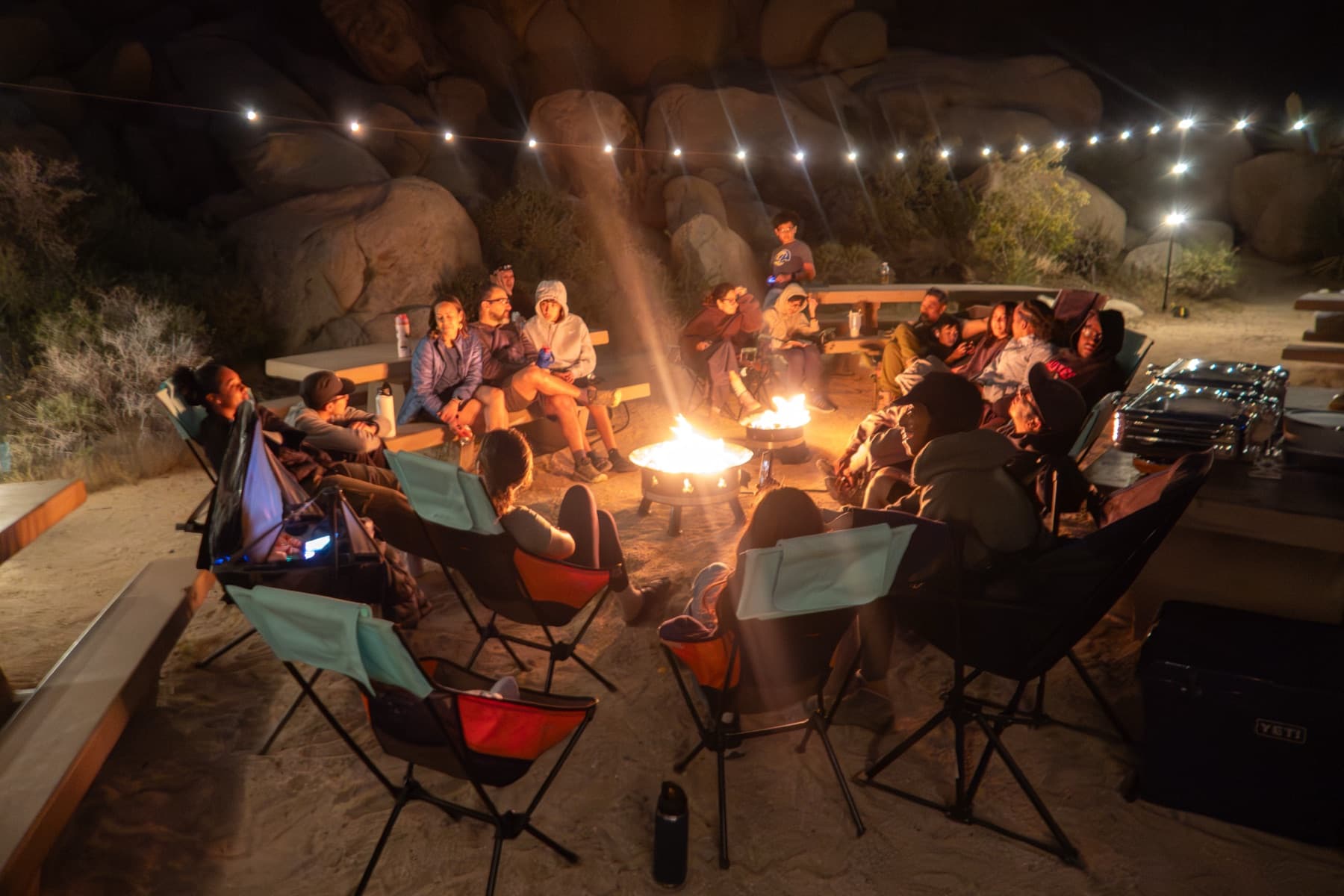
A family arrived at their first-ever campout with a flat tire after three hours of hundred-degree valley driving. Dad borrowed a jack, taught his son to change a tire in the parking lot, and by dinner nobody remembered the drive. A three-year-old threw up twice in a six-person tent at 1:30 a.m. and the family finished the night on bare cots and did laundry Monday. A windstorm hit Joshua Tree at 50 miles an hour and the next morning everyone traded their version of the night over pancakes like war veterans.
These are our stories, and none of them ended a single camping career. You adapt, you improvise, and it becomes the story your kids tell for years — ask anyone about their favorite trip and they will tell you about the one where something went sideways.
That mindset matters more than any piece of gear on this page, so we wrote it down. Five mantras, hung on a tree at every camp we run. Take them on your trip — they work anywhere.
Leave Anyway
The forecast is iffy, the packing isn't finished, somebody has a cough. Go anyway. The trips that almost didn't happen are the ones families talk about for years.
Camp as It Comes
Flat tire on arrival. Midnight vomit. Surprise wind. You adapt, you improvise, and by breakfast it's already the story your kids will tell forever.
Nobody Solos
Ask the campground host. Ask the neighbors. Borrow the hatchet you forgot. Everyone out there learned this the same way, and campers love to help.
Dirt Don't Hurt
Your kids will be filthy by Saturday lunch. Let them be. The dirt washes off; the capability it builds doesn't.
Take Up Space
You don't need experience, expensive gear, or the right brand of jacket to belong outdoors. These lands are already yours.
Leave it better: the seven habits
Leave No Trace sounds like a rulebook. In practice it's seven habits that keep the places you're falling in love with worth coming back to — and kids adopt them faster than adults when you frame them as the way campers do things, not as chores.
These lands belong to your family already. This is just how you treat what's yours.
Plan ahead
Know the rules for where you're going, check the weather, repackage food at home to cut trash.
Stick to durable ground
Stay on trails and in the designated site. Camp at least 200 feet from lakes and streams.
Pack out every crumb
All trash leaves with you, food scraps included. Wash dishes away from the creek with biodegradable soap.
Take pictures, not souvenirs
Rocks, pinecones, wildflowers, and arrowheads stay. This is the easiest one to teach kids — make it a photo scavenger hunt.
Keep fires small
Use the established ring, burn only down-and-dead wood you can break by hand, and drown it completely: if it's not cool, it's not out.
Respect wildlife
Watch from a distance and never feed anything — not even the squirrel with the good marketing. Fed animals become problem animals.
Share the place
Quiet hours are real, voices carry, and your neighbors came for the same peace you did. Let nature's sounds win.
The first-timer questions
The only step that matters
Pick your weekend
Families who name a date go camping. Families who plan to go “sometime this summer” don't — the research on this is embarrassingly clear. So do it now, while the tab is open.
- 1Pick a weekend four to six weeks out. One night is a complete trip.
- 2Tonight: choose your campground and book it — or set the free cancellation alert.
- 3The weekend before: print the checklist, pitch the tent in the yard, pack the bins.
Near our California trips?
Make your first weekend one of ours. The reservation, the gear, the food, and the teaching are handled, there are thirty people rooting for you, and trips are free to families.
See Upcoming Free TripsAnywhere else in America?
You've got this. Print the checklist, write your date at the top, and put it on the fridge — a checklist with a date on it is a plan, not a wish.
Print the ChecklistCurious what a group trip is like? See what to expect · Want in? Apply for membership. See you out there.
Why this page is free
Somebody already paid for a family's first night outside
This guide, the packing checklist, and every trip we run are free to the families who use them. They are not free to make. The tents, the cots, the camp kitchen, the campsite reservations, and the food are paid for by people who decided that a kid's first night under the stars shouldn't depend on whether their family owns a tent.
If this page saved you an afternoon of research, you're who we built it for — go camping, and don't give it another thought. If you'd rather the next family get the same thing, you can cover a piece of it.
Free tools that do the hard parts
We built these because we needed them ourselves. All of them are free.
Camp Sage
A free AI camping planner that knows 11,800+ campgrounds. Describe your family and what you want — it finds campgrounds, checks availability, builds packing lists, and answers the questions you don't know to ask yet. No signup needed.
Ask Camp Sage →Cancellation alerts
The campground you want looks sold out. It isn't — people cancel constantly, and in our booking data openings cluster in the final two weeks before check-in. Set a free alert and get notified the moment your dates open.
Set a free alert →When to Book
Every park system opens reservations on its own schedule. This calculator tells you the exact date and time booking opens for your campground, so you're online the moment it matters.
Find your booking date →The family packing checklist
Interactive, printable, and saved between trips — everything a family actually needs, nothing you don't. Print one per kid and let them pack their own bags.
Open the checklist →Free park passes
Every fourth grader in America gets a free family pass to national parks and federal lands with Every Kid Outdoors, and many state library systems lend free state-park passes with a library card — ask yours.
Get the fourth-grade pass →Community on the trail
You don't have to figure this out alone. Outdoor Afro, Latino Outdoors, and groups like ours run beginner-friendly outings across the country — because the trail should look like the country it's in.
Find your people →Go deeper on any step
Our family has written up just about every piece of this over the years. The full shelf, organized by step:
01 · Pick a campground close to home
02 · Book it early — or catch a cancellation
- Set a free cancellation alert on any campground ↗
- When to Book: the exact date reservations open for your campground ↗
- Plan the whole first trip in order, from booking window to drive ↗
- How to book any campground in America (the complete playbook) ↗
- Campsite cancellation alerts, explained ↗
- Every 2026 booking window, by park system ↗
- How we book sold-out campgrounds ↗